
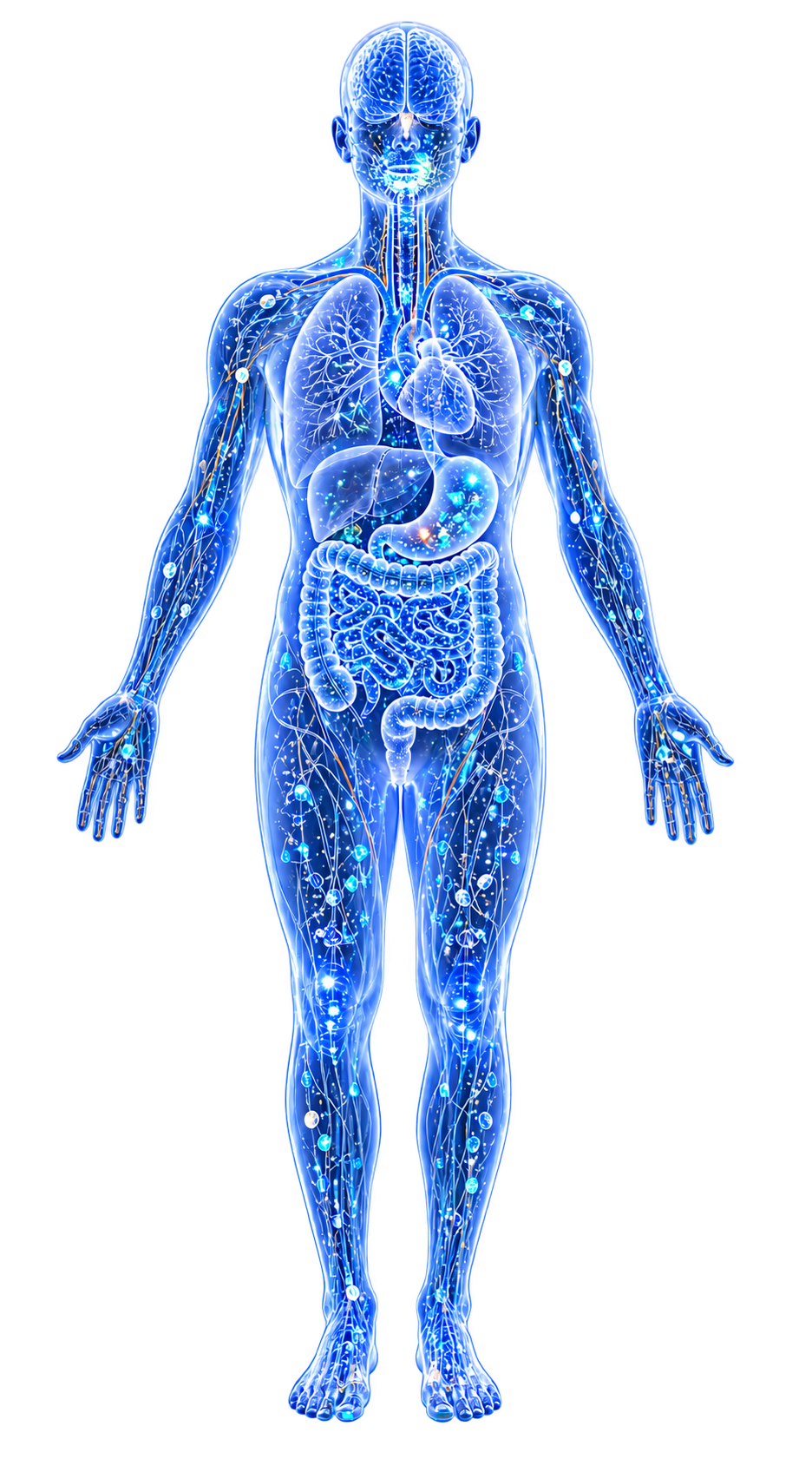
Fish is the primary dietary source of methylmercury (methylmercury (MeHg))—a potent neurotoxin that crosses the blood-brain barrier, depletes glutathione, and can increase amyloid-beta production and tau phosphorylation Mercury. methylmercury is 95-100% absorbed in the intestinal tract.
An estimated 8-10% of American women have mercury levels that could induce neurological disorders in their children.
Yet fish also provides omega-3 fatty acids (EPA, DHA), which are neuroprotective and anti-inflammatory. Higher serum EPA is associated with 82% less risk of endometriosis.[1]I Am the 1 in 10 -- What Should I Eat? A Research Review of Nutrition in EndometriosisPiecuch M, Garbicz J, Waliczek M et al. · 2022Open reference 1 ↓ Omega-3 consumption is associated with lower endometriosis risk and reduced pain in experimental models.[2]Nutrition in the prevention and treatment of endometriosis: A reviewBarnard ND, Holtz DN, Schmidt N et al. · 2023Open reference 2 ↓
Evidence map1 cited passagesInspect provenance +
Yet fish also provides omega-3 fatty acids (EPA, DHA), which are neuroprotective and anti-inflammatory. Higher serum EPA is associated with 82% less risk of endometriosis. Omega-3 consumption is associated with lower endometriosis risk and reduced pain in experimental models.
The Epidemiological Knot#
This confounding creates interpretive chaos in the neurodegeneration literature. Fish-eaters have higher mercury levels but may also have better cognitive outcomes, because the neuroprotective effects of omega-3s could mask or outweigh the neurotoxic effects of methylmercury (MeHg).
Epidemiological studies of mercury and Alzheimer's disease/dementia reach mixed results partly because "mercury exposure" is confounded by "omega-3 intake" whenever the exposure route is dietary Mercury.
Bakulski et al. (2020) explicitly flag this: "Fish consumption creates a confounding paradox: it is both the main methylmercury source and provides neuroprotective omega-3 fatty acids."
The direction of the net effect likely depends on the specific fish species (predatory fish like tuna and swordfish have higher methylmercury:omega-3 ratios than salmon or sardines), the frequency of consumption, and individual variation in mercury metabolism and detoxification.
Clinical Implication#
Blanket advice to "eat more fish" or "avoid fish" misses the paradox. Species-specific guidance is needed: small, low-trophic-level fish (sardines, anchovies, herring) provide omega-3s with lower mercury burden than large predatory fish.
For pregnant women and neurodegeneration-at-risk populations, the methylmercury (MeHg):omega-3 ratio of the specific fish matters more than total fish consumption. Algal omega-3 supplements provide the neuroprotective benefits without the mercury exposure entirely, but this eliminates other beneficial fish nutrients (selenium, vitamin D, protein).
References 2
Numbered by first appearance in the article, then reconciled with its declared source list.
- 1
Piecuch M, Garbicz J, Waliczek M et al. (2022). I Am the 1 in 10 -- What Should I Eat? A Research Review of Nutrition in Endometriosis. Nutrients.
- 2
Barnard ND, Holtz DN, Schmidt N et al. (2023). Nutrition in the prevention and treatment of endometriosis: A review. Frontiers in Nutrition.
Article network
Connect the evidence
Publicly readable discussion by ORCID-authenticated researchers. Questions, interpretation, methods, corrections, and new evidence stay attached to this record.
No discussion yet. Start with a precise question or a source-backed observation.
Activity and accepted changes
Accepted researcher context, editorial status, public discussion, and upstream Git revisions are shown together. Pending, declined, and withdrawn proposals remain private.
- published revision
massive wiki expansion: 149 stubs fixed, 100+ new pages, Rule 15 scan, keystone papers
WikiBiome Deploy Bot · +25 −25
Inspect exact Git diff ↗ - published revision
nightly maintenance: 94 stub demotions, 181 source_count fixes, 22 auto-discovered stubs, 5 adversarial audits, 3 boundary fixes, 3 evidence-level corrections
WikiBiome Deploy Bot · +2 −1
Inspect exact Git diff ↗ - published revision
WikiBiome update — 2026-04-15 17:23
WikiBiome Deploy Bot · +31 −31
Inspect exact Git diff ↗ - published revision
WikiBiome update — integrity fixes, metallomic diet pages, cross-condition analyses
WikiBiome Deploy Bot · +2 −0
Inspect exact Git diff ↗ - published revision
WikiBiome v7 — interactive microbiome metallomics encyclopedia
Karen Pendergrass · +384 −0
Inspect exact Git diff ↗