
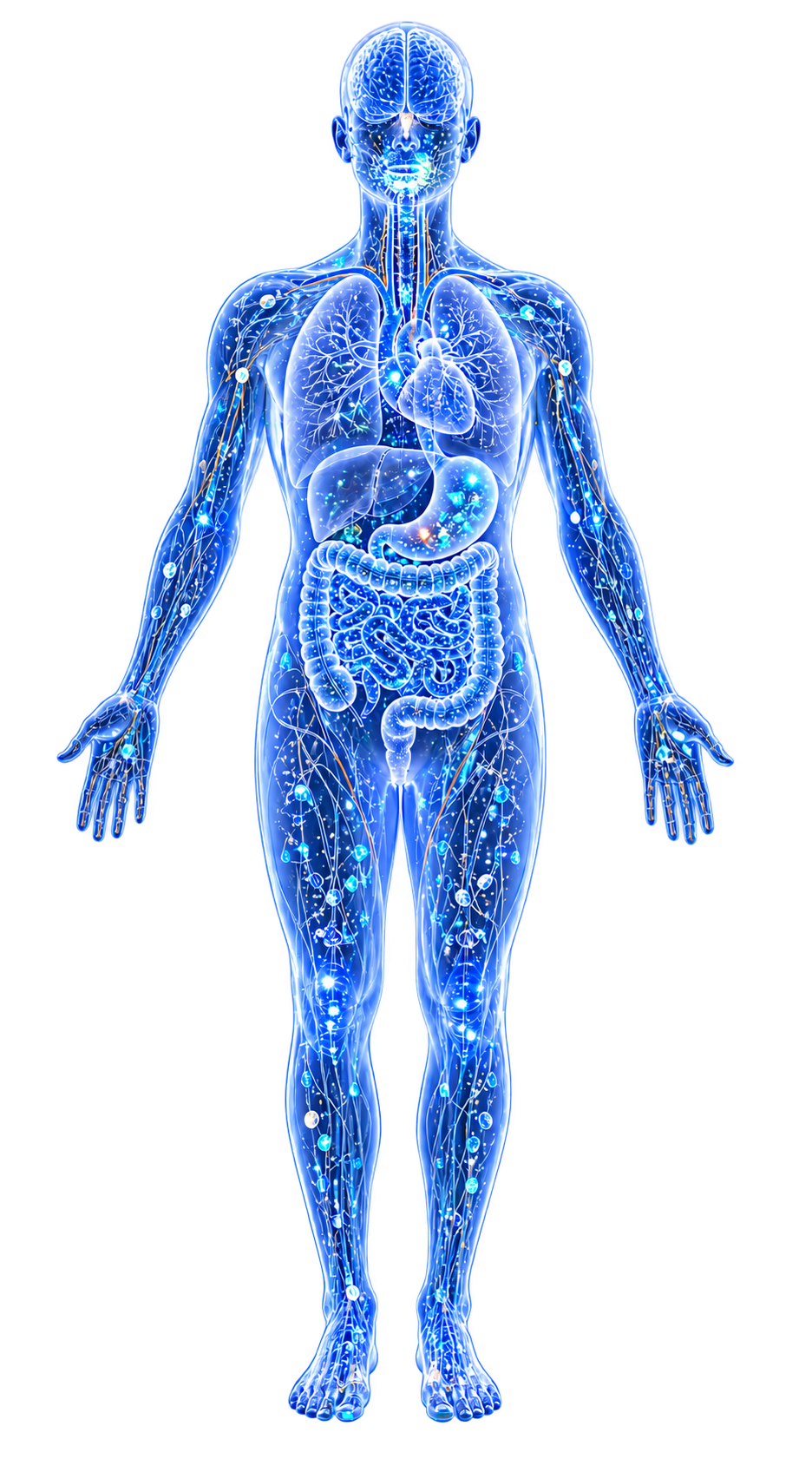
A synthesis of how dietary heavy metal exposure varies across the human lifespan, highlighting that the same metals present different risks at different developmental stages due to changing absorption rates, detoxification capacity, dietary patterns, and organ vulnerability.
Evidence map4 cited passagesInspect provenance +
This window represents the maximum convergence of vulnerability and exposure:
Infants: Formula-fed infants can reach 178% of TWI. Iron deficiency (common in infants) increases Cd absorption through shared DMT1 transporter.
Infants: Rice cereal delivers inorganic arsenic at critical neurodevelopmental window.
Children: French studies show 7.9-37.9% of children (1-36 months) exceed TDI; up to 98% under upper-bound estimates. Main sources: chocolate, cocoa, cereals.
Contents
1. The Life-Stage Vulnerability Framework2. The 6-24 Month Critical Window3. Metal-Specific Life Stage Risks4. The Microbiome Dimension5. Regulatory Implications6. ConnectionsThe Life-Stage Vulnerability Framework#
| Life Stage | Key Dietary Sources | Absorption Rate | Detox Capacity | Critical Targets |
|---|---|---|---|---|
| Fetus (in utero) | Maternal diet (transplacental) | N/A—passive transfer | None—fully dependent on maternal systems | Brain, neural tube, organ development |
| Infant (0-6 mo) | Breast milk, formula | Very high (immature gut barrier) | Very low (minimal metallothionein, immature liver) | Brain, gut microbiome colonization, immune development |
| Infant (6-24 mo) | Baby food, formula, first solids | High (40-50% for lead (Pb); elevated for all metals) | Low (developing but immature) | Brain, gut microbiome, kidney |
| Child (2-12 yr) | Mixed diet; high per-kg intake | Moderate-high | Developing | Brain (continued myelination), immune system |
| Adolescent (12-18 yr) | Adult-pattern diet; junk food exposure | Adult-like | Near-adult | Reproductive system development |
| Adult (18-65 yr) | Full dietary diversity | Standard (3-10% lead, 3-8% cadmium (Cd), 80-90% heme iron (Fe)) | Full capacity | Cumulative burden; organ maintenance |
| Pregnancy | Same as adult + increased absorption | Increased (upregulated calcium (Ca), iron channels) | Compromised (metal mobilization from bone stores) | Fetal development; placental transfer |
| Elderly (65+ yr) | Often reduced diversity; medication interactions | Variable (declining GI function) | Declining (reduced renal clearance, liver function) | Neurodegeneration, bone (lead release), kidney |
The 6-24 Month Critical Window#
This window represents the maximum convergence of vulnerability and exposure:[1]Age-Window Metabolic and Toxicokinetic Vulnerability in Vegetable-Based Baby Foods: Separating Developmental Readiness from Toxicant SusceptibilityKaren Pendergrass · 2026Open reference 1 ↓
Why exposure peaks. Introduction of solid foods—vegetables, cereals, and fruits that are metal hyperaccumulators. Rice-based cereals are the dominant first food in many cultures—delivering inorganic arsenic.
Vegetable-based baby foods (carrots, sweet potatoes, spinach) deliver cadmium.
All commercial baby foods contain detectable metals.
Why vulnerability peaks. Glutathione (GSH) synthesis immature—primary cadmium and lead detoxification pathway unavailable. Metallothionein expression low—reduced metal-binding capacity. Renal clearance developing—slower metal excretion.
Gut barrier permeable—tight junctions still maturing. Calcium and iron channels upregulated for growth—same channels that toxic metals exploit. Body weight ratio: 10x higher per-kg exposure than adults from identical foods.
Why it matters permanently.
Gut microbiome is in primary colonization phase—metal perturbation during this window may permanently shape microbial ecology. Brain myelination and synaptogenesis are at maximum rates—lead and mercury exposure produces irreversible neurodevelopmental effects. Immune tolerance is being established—metal-driven dysbiosis may prime autoimmune pathways.
Metal-Specific Life Stage Risks#
Lead#
Infants/children: Absorb 40-50% of ingested lead vs. 3-10% in adults. No safe level. Neurodevelopmental effects at any exposure.
Pregnancy: Bone lead stores (accumulated over decades) mobilize during pregnancy, exposing the fetus even without current environmental exposure. Elderly: Osteoporosis mobilizes bone lead stores, creating late-life exposure spike from childhood accumulation.
Cadmium#
Infants: Formula-fed infants can reach 178% of TWI.[2]The contribution of infant formula to the food survey-based dietary exposure of nine selected elementsHopfner T, Wollenberg M, Jager A et al. · 2025Open reference 2 ↓ Iron deficiency (common in infants) increases cadmium (Cd) absorption through shared DMT1 transporter.
Adults: Rice is the dominant source globally; 30-year half-life means lifetime accumulation in kidneys. Elderly: Cumulative renal cadmium reaches threshold for tubular damage; kidney function decline accelerates.
Arsenic#
Infants: Rice cereal delivers inorganic arsenic at critical neurodevelopmental window.[3]Arsenic concentration and speciation in infant formulas and first foodsJackson BP, Taylor VF, Punshon T et al. · 2012Open reference 3 ↓ Adults: Chronic low-level exposure from rice and water; methylation capacity varies genetically. Pregnancy: Arsenic crosses the placenta; associated with low birth weight and developmental effects.
Nickel#
Children: French studies show 7.9-37.9% of children (1-36 months) exceed TDI; up to 98% under upper-bound estimates.[4]Nickel Exposure from Food and Levels in Children's Blood and Tissues: Health ImplicationsDobrzyńska MM, Gajowik A, Jankowska-Steifer EA et al. · 2025Open reference 4 ↓ Main sources: chocolate, cocoa, cereals.
Adults: 15-20% of adult women are nickel-sensitized; dietary nickel triggers systemic reactions. Elderly: Long-term dietary nickel exposure may contribute to neurotoxicity and cognitive decline.
Aluminum#
Infants: Soy-based formulas contain up to 4,170 μg/kg aluminum. Infant cereals range 197-1,852 μg/kg. No FDA or EU limits for aluminum in infant foods.
Adults: Antacids and processed foods are primary sources; aluminum accumulates in brain tissue. Elderly: Aluminum accumulation in brain tissue is associated with Alzheimer's disease pathology.
The Microbiome Dimension#
Dietary metal exposure at each life stage doesn't just affect the individual—it reshapes the gut microbial ecosystem that influences all subsequent health.
Infant colonization (0-3 years): Metal perturbation during primary colonization may establish a dysbiotic baseline that persists into adulthood. The metals in formula and baby food select for metal-tolerant organisms during the window when the microbial community is most malleable.
Adult maintenance: Chronic low-level metal exposure through staple foods maintains selection pressure favoring siderophore-producing pathobionts. Dietary patterns (high-fat/low-fiber vs. Mediterranean) modulate both metal exposure and microbial resilience.
Elderly decline: Declining microbial diversity + declining detoxification capacity = amplified metal sensitivity. The gut microbiome's capacity to buffer metal exposure decreases as the organisms providing that service (Lactobacillus, Bifidobacterium) decline with age.
Regulatory Implications#
Current food safety regulation does not account for life-stage vulnerability.
FDA action levels exist for only 2 metals in infant foods (lead (Pb) in baby food, arsenic (As) in rice cereal). No regulation adjusts maximum levels for body-weight-scaled exposure in children. Adult-derived Tolerable Daily Intakes are applied to infant foods without age-specific safety factors.
The EU is ahead of the US with lower limits for infant-specific food categories, but still lacks limits for nickel (Ni), aluminum (Al), and mercury (Hg) in infant foods.
Connections#
- Heavy Metals in Infant Foods—the detailed analysis of infant food contamination
- Developmental Metal Vulnerability: Critical Windows of Susceptibility—the biological basis for age-specific susceptibility
- Dietary Cadmium Exposure—cadmium's life-stage exposure patterns
- Dietary Arsenic Exposure—arsenic in infant rice cereal
- Dietary Lead Exposure—lead's bone storage and mobilization across life stages
- Dietary Nickel Exposure—nickel exposure in children
- Dietary Metal-Microbiome Interactions—how dietary metals shape the gut ecosystem at each stage
- Plant Metal Hyperaccumulation—why "healthy" baby food ingredients concentrate metals
References 6
Numbered by first appearance in the article, then reconciled with its declared source list.
- 1
Karen Pendergrass (2026). Age-Window Metabolic and Toxicokinetic Vulnerability in Vegetable-Based Baby Foods: Separating Developmental Readiness from Toxicant Susceptibility. Zenodo Preprint.
- 2
Hopfner T, Wollenberg M, Jager A et al. (2025). The contribution of infant formula to the food survey-based dietary exposure of nine selected elements. Journal of Environmental Exposure Assessment.
- 3
Jackson BP, Taylor VF, Punshon T et al. (2012). Arsenic concentration and speciation in infant formulas and first foods. Pure and Applied Chemistry.
- 4
Dobrzyńska MM, Gajowik A, Jankowska-Steifer EA et al. (2025). Nickel Exposure from Food and Levels in Children's Blood and Tissues: Health Implications. Acta Sci Pol Technol Aliment.
- 5
★Balali-Mood M, Naseri K, Tahergorabi Z et al. (2021). Toxic Mechanisms of Five Heavy Metals: Mercury, Lead, Chromium, Cadmium, and Arsenic. Frontiers in Pharmacology.
- 6
Gonzalez-Suarez S, Paz-Montelongo S, Niebla-Canelo D et al. (2022). Baby Food Jars as a Dietary Source of Essential (K, Na, Ca, Mg, Fe, Zn, Cu, Co, Mo, Mn) and Toxic Elements (Al, Cd, Pb, B, Ba, V, Sr, Li, Ni). Applied Sciences.
Article network
Mentioned here 10
Connect the evidence
Publicly readable discussion by ORCID-authenticated researchers. Questions, interpretation, methods, corrections, and new evidence stay attached to this record.
No discussion yet. Start with a precise question or a source-backed observation.
Activity and accepted changes
Accepted researcher context, editorial status, public discussion, and upstream Git revisions are shown together. Pending, declined, and withdrawn proposals remain private.
- published revision
massive wiki expansion: 149 stubs fixed, 100+ new pages, Rule 15 scan, keystone papers
WikiBiome Deploy Bot · +30 −30
Inspect exact Git diff ↗ - published revision
WikiBiome update — 2026-04-15 17:23
WikiBiome Deploy Bot · +0 −1
Inspect exact Git diff ↗ - published revision
WikiBiome update — integrity fixes, metallomic diet pages, cross-condition analyses
WikiBiome Deploy Bot · +110 −0
Inspect exact Git diff ↗