
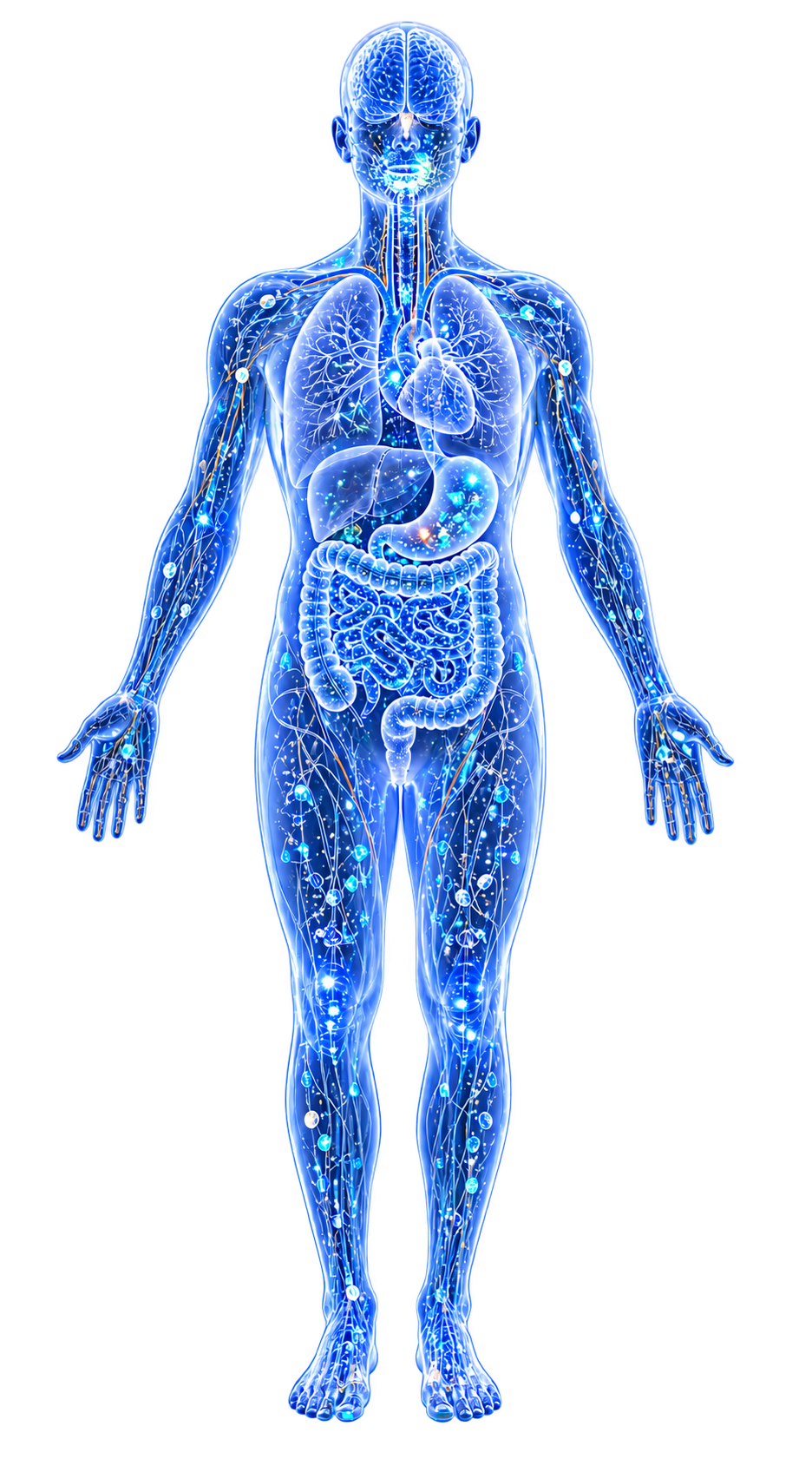
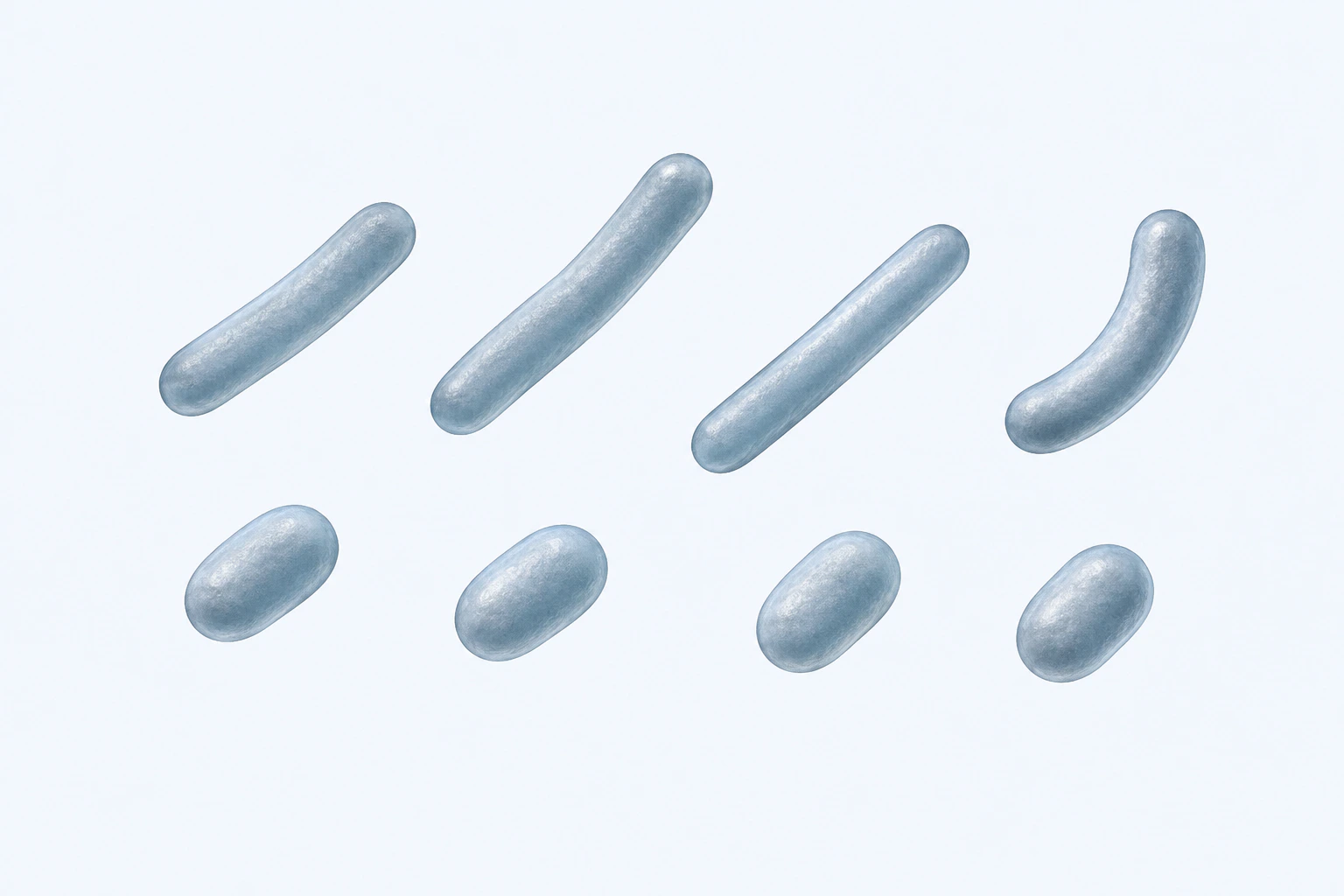
Type-species-anchored Sutterella reconstruction showing two documented pleomorphic forms. Representative, non-diagnostic, and not a micrograph.
Scientific media record1 verified identifier
- Subject
- Sutterellataxon · genus
- Identifiers
- NCBITaxon:40544
- Review
- Editorial review completeIdentifiers authority-verified · Accessibility validated · · sutterella|sutterella-morphology-v1.webp
- Digital source
- Trained-algorithmic mediaCreated with a trained generative algorithm and reviewed by WikiBiome for subject identity, scientific framing, identifiers, provenance, and accessibility.
- Scientific basis
- Sutterella — NCBI TaxonomySutterella — LPSNSutterella wadsworthensis gen. nov., sp. nov.Colonic mucosal isolates of Sutterella wadsworthensis
- License
- CC BY-SA 4.0Created
A Gram-negative, microaerophilic genus within the Proteobacteria phylum (family Sutterellaceae). The primary species S. wadsworthensis is classified as a pathobiont due to its IgA-degrading capacity and associations with neurodevelopmental and inflammatory conditions.
However, Sutterella shows notably contradictory findings across studies, being enriched in some disease contexts and depleted in others, complicating its classification.
Evidence map6 cited passagesInspect provenance +
Consistently enriched in ASD across multiple studies, making it one of the more reproducible ASD-associated taxa.
Increased in MS patients on immunomodulatory therapy (treatment effect rather than disease effect), suggesting that immune suppression may create a niche for Sutterella expansion.
Contradictory findings: enriched in some IBD cohorts (particularly in mucosal biopsies) but depleted in others (stool-based studies). This inconsistency may reflect differences between mucosal and luminal sampling, disease phase, or IBD subtype.
Detected in intestinal biopsies of patients with crohns disease and ulcerative colitis, suggesting mucosal colonization preference.
Enriched in POI: increased Sutterella alongside Butyricimonas, Dorea, and Lachnobacterium; reduced Faecalibacterium and Bulleidia. Shifts correlated with FSH, LH, E2, AMH and FSH/LH ratio.
Identified in MR analyses examining gut microbiota-lipid and gut microbiota-CVD relationships, though effect sizes are modest, ].
Contents
1. Role in Gut Ecosystem2. Disease Associations3. Key Metabolites4. Mechanistic Considerations5. ConnectionsRole in Gut Ecosystem#
Adheres to intestinal epithelial cells and resides within the mucosal layer, positioning it in close contact with the host immune system.
Produces IgA proteases that degrade secretory immunoglobulin A, the primary antibody defending mucosal surfaces. This IgA-degrading activity may impair mucosal immunity and facilitate pathogen invasion or immune dysregulation.
Relatively bile-resistant, allowing colonization of the small intestine and colon. Does not produce significant Short-Chain Fatty Acids (SCFAs), distinguishing it from beneficial anaerobes in similar ecological niches.
Disease Associations#
Autism Spectrum Disorder#
Consistently enriched in ASD across multiple studies, making it one of the more reproducible ASD-associated taxa.[1]Bezawada 2020 — Autism Spectrum Disorder and the Gut Microbiota in Children: A Systematic ReviewNavya Bezawada, Tze Hui Phang, Georgina L. Hold et al. · 2020Open reference 1 ↓
IgA degradation may contribute to the increased gut permeability ("leaky gut") reported in ASD children, potentially allowing microbial metabolites and bacterial products to cross the gut barrier and affect the CNS via the Gut-Brain Axis.
Multiple Sclerosis#
Increased in MS patients on immunomodulatory therapy (treatment effect rather than disease effect), suggesting that immune suppression may create a niche for Sutterella expansion.[2]Alterations of the human gut microbiome in multiple sclerosisSushrut Jangi, Roopali Gandhi, Laura M. Cox et al. · 2016Open reference 2 ↓
May benefit from reduced IgA pressure under immunomodulatory treatment, consistent with its IgA-degrading phenotype.
Inflammatory Bowel Disease#
Contradictory findings: enriched in some IBD cohorts (particularly in mucosal biopsies) but depleted in others (stool-based studies). This inconsistency may reflect differences between mucosal and luminal sampling, disease phase, or IBD subtype.[3]Gut-oriented interventions in patients with multiple sclerosis: fact or fiction?V. Martinelli, M. Albanese, M. Altieri et al. · 2022Open reference 3 ↓
Detected in intestinal biopsies of patients with Crohn's Disease and ulcerative colitis, suggesting mucosal colonization preference.[4]Feeding the gut microbiome: impact on multiple sclerosisMatteo Bronzini, Alessandro Maglione, Rachele Rosso et al. · 2023Open reference 4 ↓
Premature Ovarian Insufficiency#
- Enriched in POI: increased Sutterella alongside Butyricimonas, Dorea, and Lachnobacterium; reduced Faecalibacterium and Bulleidia. Shifts correlated with FSH, LH, E2, AMH and FSH/LH ratio.[5]Association between premature ovarian insufficiency and gut microbiotaWu J, Zhuo Y, Liu Y et al. · 2021Open reference 5 ↓
Cardiovascular and Metabolic Disease#
- Identified in MR analyses examining gut microbiota-lipid and gut microbiota-CVD relationships, though effect sizes are modest.[6]Causality of the gut microbiome and atherosclerosis-related lipids: a bidirectional Mendelian Randomization studyDa Teng, Wenjuan Jia, Wenlong Wang et al. · 2024Open reference 6 ↓[7]Assessment of the causal relationship between gut microbiota and cardiovascular diseases: a bidirectional Mendelian randomization analysisXiao-Ce Dai, Yi Yu, Si-Yu Zhou et al. · 2024Open reference 7 ↓
Key Metabolites#
- IgA protease—degrades secretory IgA; impairs mucosal immune defense
- No significant SCFA production documented
Mechanistic Considerations#
The IgA-degrading capacity of Sutterella provides a clear mechanistic link to mucosal immune impairment. In the healthy gut, secretory IgA coats commensal bacteria and neutralizes pathogens; its degradation could destabilize the entire mucosal immune equilibrium.
The increase under immunomodulatory therapy in MS suggests Sutterella is normally kept in check by robust mucosal immunity, and its expansion may be a consequence rather than cause of immune dysregulation.
As a Proteobacteria member, its enrichment may reflect the broader "Proteobacteria bloom" seen in inflammatory conditions.
Connections#
- Autism Spectrum Disorder—enriched in ASD; IgA degradation may contribute to gut barrier dysfunction
- Multiple Sclerosis—increased under immunomodulatory therapy
- Crohn's Disease—detected in intestinal biopsies; contradictory enrichment/depletion findings
- Gut-Brain Axis—mucosal immune impairment may allow neuroactive metabolite translocation
- Metal-Driven Inflammation—IgA degradation disrupts mucosal homeostasis
- Dysbiosis—Proteobacteria expansion as marker of inflammatory dysbiosis
- Escherichia coli—fellow Proteobacteria; both expand under inflammatory conditions
- Akkermansia muciniphila—both are mucosal-associated; potentially competing for mucosal niche
References 7
Numbered by first appearance in the article, then reconciled with its declared source list.
- 1
Navya Bezawada, Tze Hui Phang, Georgina L. Hold et al. (2020). Bezawada 2020 — Autism Spectrum Disorder and the Gut Microbiota in Children: A Systematic Review. Annals of Nutrition and Metabolism.
- 2
Sushrut Jangi, Roopali Gandhi, Laura M. Cox et al. (2016). Alterations of the human gut microbiome in multiple sclerosis. Nature Communications.
- 3
V. Martinelli, M. Albanese, M. Altieri et al. (2022). Gut-oriented interventions in patients with multiple sclerosis: fact or fiction?. European Review for Medical and Pharmacological Sciences.
- 4
Matteo Bronzini, Alessandro Maglione, Rachele Rosso et al. (2023). Feeding the gut microbiome: impact on multiple sclerosis. Frontiers in Immunology.
- 5
Wu J, Zhuo Y, Liu Y et al. (2021). Association between premature ovarian insufficiency and gut microbiota. BMC Pregnancy and Childbirth.
- 6
Da Teng, Wenjuan Jia, Wenlong Wang et al. (2024). Causality of the gut microbiome and atherosclerosis-related lipids: a bidirectional Mendelian Randomization study. BMC Cardiovascular Disorders.
- 7
Xiao-Ce Dai, Yi Yu, Si-Yu Zhou et al. (2024). Assessment of the causal relationship between gut microbiota and cardiovascular diseases: a bidirectional Mendelian randomization analysis. BioData Mining.
Article network
Mentioned here 10
Pages linking here 5
Connect the evidence
Publicly readable discussion by ORCID-authenticated researchers. Questions, interpretation, methods, corrections, and new evidence stay attached to this record.
No discussion yet. Start with a precise question or a source-backed observation.
Activity and accepted changes
Accepted researcher context, editorial status, public discussion, and upstream Git revisions are shown together. Pending, declined, and withdrawn proposals remain private.
- published revision
Consolidate microbial metabolite knowledge
Karen Pendergrass · +1 −1
Inspect exact Git diff ↗ - published revision
massive wiki expansion: 149 stubs fixed, 100+ new pages, Rule 15 scan, keystone papers
WikiBiome Deploy Bot · +7 −7
Inspect exact Git diff ↗ - published revision
nightly maintenance: 94 stub demotions, 181 source_count fixes, 22 auto-discovered stubs, 5 adversarial audits, 3 boundary fixes, 3 evidence-level corrections
WikiBiome Deploy Bot · +1 −0
Inspect exact Git diff ↗ - published revision
18 foundational sources + 10 microbe entities deepened
WikiBiome Deploy Bot · +6 −3
Inspect exact Git diff ↗ - published revision
WikiBiome update — 2026-04-15 17:23
WikiBiome Deploy Bot · +0 −1
Inspect exact Git diff ↗ - published revision
v2 migration Priority 3: 17 metal + 82 microbe entities upgraded with seo_target, wikipedia_differentiation, conditions data
WikiBiome Deploy Bot · +6 −0
Inspect exact Git diff ↗ - published revision
WikiBiome update — integrity fixes, metallomic diet pages, cross-condition analyses
WikiBiome Deploy Bot · +13 −5
Inspect exact Git diff ↗ - published revision
WikiBiome update — 2026-04-10 13:49
WikiBiome Deploy Bot · +60 −0
Inspect exact Git diff ↗