
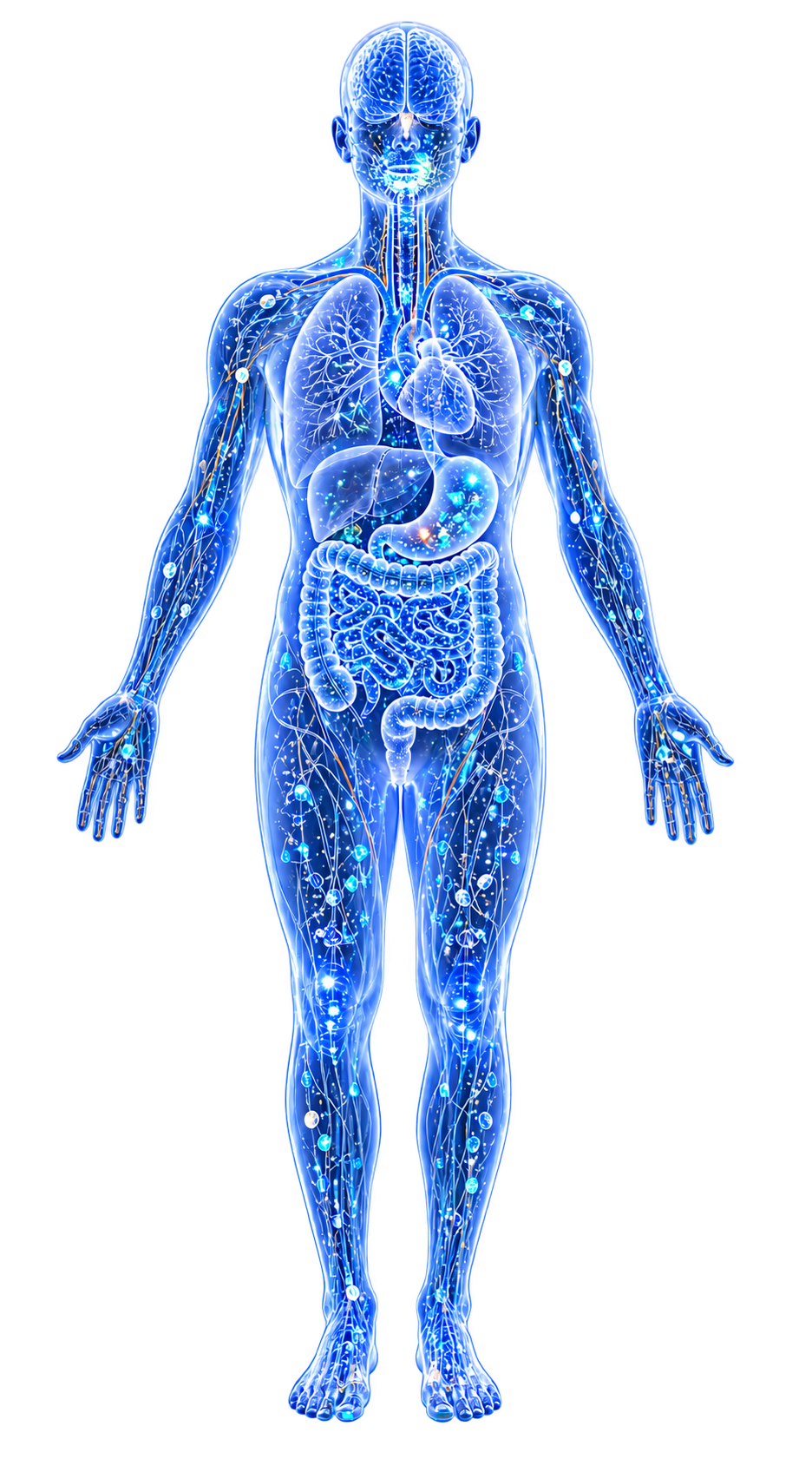
Chronic Nickel exposure can damage the central nervous system, causing behavioral and cognitive deficits through Oxidative Stress in the hippocampus and disruption of multiple neurotransmitter systems.
Evidence map4 cited passagesInspect provenance +
Lamtai et al. (2018) chronically administered NiCl₂ to Wistar rats (0.25, 0.5, 1 mg/kg IP daily for 8 weeks)—notably low doses designed to mimic environmental trace exposure:
A consistent finding:
People living near heavy metal pollution sources may develop behavioral pathologies.
Children are especially vulnerable due to developing nervous systems.
Contents
1. Evidence from Animal Studies2. Mechanisms3. Sex Differences4. Relevance to Humans5. ConnectionsEvidence from Animal Studies#
Lamtai et al. (2018) chronically administered NiCl₂ to Wistar rats (0.25, 0.5, 1 mg/kg IP daily for 8 weeks)—notably low doses designed to mimic environmental trace exposure:[1]Effect of Chronic Administration of Nickel on Affective and Cognitive Behavior in Male and Female RatsLamtai M, Azirar S, Zghari O et al. · 2018Open reference 1 ↓
Anxiety#
Dose-dependent increase in anxiety-like behavior at all doses in both sexes. Measured by: decreased time in center area (OFT), decreased time in open arms (EPM). No effect on locomotor activity—ruling out general sedation.
Depression#
Increased immobility and decreased struggling in forced swimming test. Males: significant at 1 mg/kg. Females: significant at 0.5 and 1 mg/kg.
Memory Impairment#
Spatial learning impaired only in males at 1 mg/kg (Morris Water Maze). Females showed no significant memory deficits at any dose—a notable sex difference.
Hippocampal Oxidative Stress#
All dose-dependent. Increased: lipid peroxidation (TBARS up to 153% in males), nitric oxide (NO up to 133%). Decreased: SOD activity (down up to 37%), catalase activity (down up to 67%).
Mechanisms#
Oxidative stress: nickel binds sulfhydryl groups on antioxidant enzymes (SOD, CAT), directly inactivating them. This leads to ROS accumulation → lipid peroxidation → membrane damage → neuronal death.
Nitric oxide toxicity: nickel stimulates NO synthase → NO + superoxide → peroxynitrite (ONOO⁻) → potent oxidant damaging proteins, nucleic acids, lipids. Neurotransmitter disruption: nickel decreases dopamine, norepinephrine, serotonin levels in brain; interferes with acetylcholine release; alters GABA uptake.
NMDA receptor modulation: nickel (Ni)²⁺ is a known subunit-dependent blocker of NMDA receptors, with complex effects on different NR2 subunits (blocks NR2A-containing, potentiates NR2B-containing). BBB penetration: nickel enters brain through BBB failures and via olfactory pathway, accumulating in cerebral cortex and hippocampus.
Sex Differences#
A consistent finding.[1]Effect of Chronic Administration of Nickel on Affective and Cognitive Behavior in Male and Female RatsLamtai M, Azirar S, Zghari O et al. · 2018Open reference 1 ↓ Males more sensitive for anxiety and memory endpoints. Females showed depression-like effects at lower doses (0.5 mg/kg) than males (1 mg/kg) in some measures.
May relate to hormonal differences, differential nickel metabolism, or sex-specific neurotransmitter vulnerabilities.
Relevance to Humans#
People living near heavy metal pollution sources may develop behavioral pathologies.[1]Effect of Chronic Administration of Nickel on Affective and Cognitive Behavior in Male and Female RatsLamtai M, Azirar S, Zghari O et al. · 2018Open reference 1 ↓ Children are especially vulnerable due to developing nervous systems.[2]Nickel Exposure from Food and Levels in Children's Blood and Tissues: Health ImplicationsDobrzyńska MM, Gajowik A, Jankowska-Steifer EA et al. · 2025Open reference 2 ↓ Nickel's effects on the endocrine system (hypothalamus, pituitary) could compound neurobehavioral effects.
No human clinical studies yet confirming these animal findings at environmental exposure levels.
Connections#
- Nickel—the causative metal
- oxidative stress—the primary mechanism in hippocampus
- Dietary Nickel Exposure—non-occupational route of chronic exposure
- Parallels Metabolic Syndrome and Metal Exposure in that both are non-cancer chronic effects of low-level nickel exposure
References 9
Numbered by first appearance in the article, then reconciled with its declared source list.
- 1
Lamtai M, Azirar S, Zghari O et al. (2018). Effect of Chronic Administration of Nickel on Affective and Cognitive Behavior in Male and Female Rats. Brain Sciences.
- 2
Dobrzyńska MM, Gajowik A, Jankowska-Steifer EA et al. (2025). Nickel Exposure from Food and Levels in Children's Blood and Tissues: Health Implications. Acta Sci Pol Technol Aliment.
- 3
Yoram Finkelstein, Seth Bhatt, Danielle Bhatt (2022). Finkelstein 2022 -- Lead Exposure, Gut Microbiome, and Parkinson's Disease Risk. npj Parkinson's Disease.
- 4
Hui Chen, Wenbo Wang, Shu G Chen (2025). Chen 2025 -- Indole Metabolites and Gut Microbiome in Parkinson's Disease. Scientific Reports.
- 5
Katrin Klotz, Wobbeke Weistenhofer, Frauke Neff et al. (2017). The Health Effects of Aluminum Exposure. Deutsches Arzteblatt International.
- 6
Mouloud Lamtai, Jihane Chaibat, Sihame Ouakki et al. (2018). Lamtai 2018 — Effect of Chronic Administration of Nickel on Affective and Cognitive Behavior in Male and Female Rats. Brain Sciences.
- 7
Pengya Zhang, Huizhen Zheng, Guangbo Qu (2021). Zhang 2021 -- Lead Exposure and Gut Microbiome Alterations in Neurodegeneration. Microbiome.
- 8
Brad A. Racette, Susan Searles Nielsen, Susan R. Criswell et al. (2017). Dose-Dependent Progression of Parkinsonism in Manganese-Exposed Welders. Neurology.
- 9
Xulan Zhou, Xiaochun Xia, Liming Li et al. (2025). Evaluation of Heavy Metals and Essential Minerals in the Hair of Children with Autism Spectrum Disorder and Their Association with Symptom Severity. Biological Trace Element Research.
Article network
Connect the evidence
Publicly readable discussion by ORCID-authenticated researchers. Questions, interpretation, methods, corrections, and new evidence stay attached to this record.
No discussion yet. Start with a precise question or a source-backed observation.
Activity and accepted changes
Accepted researcher context, editorial status, public discussion, and upstream Git revisions are shown together. Pending, declined, and withdrawn proposals remain private.
- published revision
Backfill oxidative stress concept links
Karen Pendergrass · +1 −1
Inspect exact Git diff ↗ - published revision
massive wiki expansion: 149 stubs fixed, 100+ new pages, Rule 15 scan, keystone papers
WikiBiome Deploy Bot · +20 −14
Inspect exact Git diff ↗ - published revision
nightly maintenance: 94 stub demotions, 181 source_count fixes, 22 auto-discovered stubs, 5 adversarial audits, 3 boundary fixes, 3 evidence-level corrections
WikiBiome Deploy Bot · +3 −0
Inspect exact Git diff ↗ - published revision
pre-overnight checkpoint 2026-04-18
WikiBiome Deploy Bot · +3 −1
Inspect exact Git diff ↗ - published revision
WikiBiome update — integrity fixes, metallomic diet pages, cross-condition analyses
WikiBiome Deploy Bot · +6 −4
Inspect exact Git diff ↗ - published revision
WikiBiome v7 — interactive microbiome metallomics encyclopedia
Karen Pendergrass · +63 −0
Inspect exact Git diff ↗